A small boat, mending seams
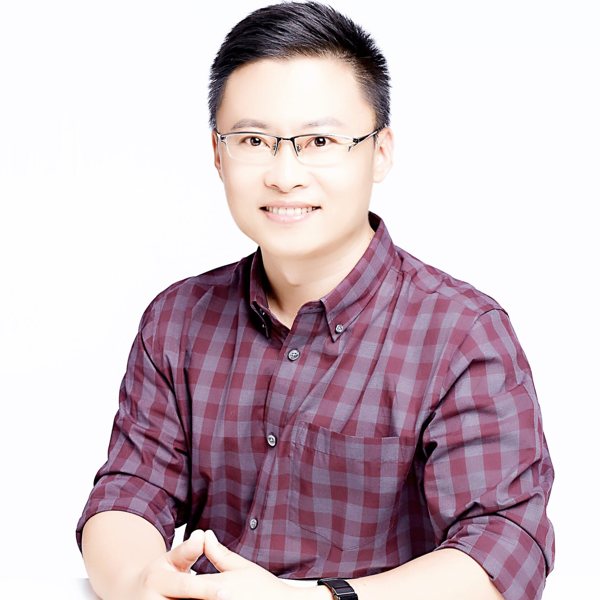
I did not plan to be a trader. If you had asked me ten years ago, I would have said I work on the seams between things: between a newspaper and the people who advertise in it, between one team of engineers and another, between a museum's story and the people who might want to hold it in their hands. Trade, it turns out, is also seams. I was pushed into it by events I did not choose, and I am learning it as a beginner, in my second language, in a country where I started with no contacts.
I am a Christian, and the image I keep returning to is a small boat on water I cannot read, with a needle and thread. I cannot steer the sea. I can sew what is torn, close to where I am. I do not know whether my small efforts will hold. I have decided to keep sewing anyway.
Three things twenty years taught me
Trust needs a structure, so that the cautious side is not punished. In 2014 I filed a patent application, granted in 2021, for a mechanism in large online purchases such as cars, designed so that a buyer who waits and commits money is rewarded rather than penalised. Alibaba owns the patent; I am the first-named of sixteen inventors. What I took from it is simple: if the weaker party can safely trust you, the market grows. If not, it shrinks.
The valuable work is often in the gap nobody owns. In 2013, as head of advertising sales at Yahoo China, I designed a charity campaign around a simple idea: a growing child needs shoes that fit, and giving money does not guarantee that. We contracted a national poverty-alleviation foundation to measure the feet of children without shoes at partner schools. A sports brand became the supplier. For each pair sold on the brand's online store, the profit paid for one pair made for a child on that list. Buyers could follow the tracking of their own parcel and of the child's, and every child's box held a pre-addressed, pre-paid postcard to write back to the buyer. One person supporting one person, visible to both. The pieces sat in different places: a foundation, a brand, the agency that sold the idea, and Alibaba's business units in Hangzhou, which had no single door to knock on. My part was to stitch them together on one platform. By May 2013 more than 15,000 pairs had been sold online, and as I remember it, over 30,000 children eventually received new shoes. The project also led to Hangzhou, where I worked on Tmall's 2013 Double 11 offline-to-online project: according to the project review, more than 25,000 stores took part. Neither project was mine alone. I was the person who knew who to ask.
Tools should help small businesses, not replace the people in them. At an AI customer-service start-up, I argued that a person working with good tools could serve five to ten people's worth of customers, and that the conversations themselves were a free source of insight for small brands about what their customers wanted. The company nearly collapsed, changed direction, survived the pandemic, and its customer-service product was later acquired by a listed company. I would not call it a triumph. I would call it proof that small teams can adapt when they stay honest about what is failing.
What I did not expect
The route was not smooth. I started a cultural-heritage company in Xi'an in 2018 with my own money and lost money on several projects. I planned and commissioned an illustrated pop-up book, Chang'an! Chang'an!, which was published in 2022 and later won children's-book and design awards, which belong to the publisher and the creators. I wrote story treatments for immersive VR and location-based XR experiences from the same material. Then I moved to the UK with limited English, no network and no partners, and kept looking for something useful to do. I am telling you this not as a success story but because you should know what kind of person is behind this website.
An underdog I backed
I put my own money behind a Korean animation team making a feature film called Underdog, about abandoned dogs finding their own way. In October 2018 it won Best Animated Feature at the Silk Road International Film Festival in China, reported at the time as a first for a Korean film. Then it struggled to find an audience, and one of its directors spoke of running into a high wall of prejudice against Korean feature animation. I did not get a return, and I do not regret it. The spirit of that film, and of the people who made it, is part of what moves me most.
What I believe
Humanity is at the early stage of a very large change, and most of us are struggling in the uncertainty of it. I stay optimistic about people working together. I believe some values hold across long cycles: honesty, fairness, caring for those with less power. I do not think the internet should be allowed to crush small businesses, especially those that never learned how to optimise themselves for it. I do think every business, mine included, should keep improving, and should do so in ways that are lawful and can last, as people have gradually learned to do over centuries of trade.
A contradiction I should admit
I come from large platforms, and UK Oriental Trading sources goods as an overseas ecosystem partner of one of China's leading internet e-commerce platforms. It would be easy to say one thing and do another. So here is what we do: we say where our goods come from; we say what our role is; we write terms that a small shop can live with; we follow the rules on import, labelling and tax; and we do not ask any buyer to depend on us exclusively. If we ever fail at these, please tell us.
Why I am here
Abraham was told to leave and go to a land he did not know. He was not asked to prove anything first. I feel something like that. I did not choose this country or this trade, but I think I was sent here to be useful, and the usefulness has to be discovered. If you are a Chinese brand that wants a careful way into the UK, a UK retailer or garage that wants a reliable and honest supplier, or someone working on heritage, storytelling or technology across cultures, I would like to hear from you.